Low-cost Electrochemical Sensor Box to detect Organic Micropollutants - Université D’angers
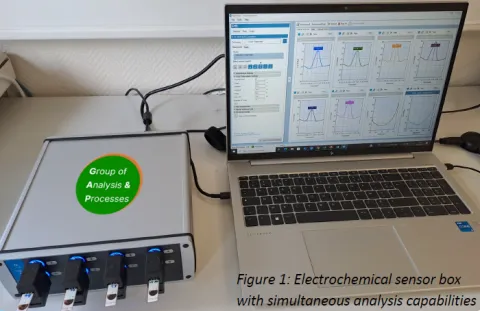
University of Angers introduces a monitoring electrochemical sensor box enabling low-cost, near real-time quantitative assessment of non-degradable and persistent chemicals such as pharmaceuticals, nitrites, plastic additives and Perfluoroalkyl substances (PFAS) in sweet water. Unlike other solutions on the market, UA’s sensor implements electrodes modified with molecularly imprinted polymers (MIPs) and gold nanoparticles to achieve higher selectivity and sensitivity to organic micropollutants. Combined with the on-site measurement capability and option to detect multiple contaminants simultaneously, the sensor is a steppingstone in the Common Implementation Strategy (CIS) of the Water Framework Directive (WFD) towards improved water quality surveillance and decision-making. The wide applicability of the sensor has been proven during the iMERMAID’s use case implementations at diverse wastewater treatment plants. The sensors demonstrated sensibility and selectivity far beyond limits required by national laws.
Technical information
- Sensitive: High sensitivity to persistent chemicals (e.g. pharmaceuticals, pesticides, PFAS)
- Simultaneous analysis: Multichannel system to monitor multiple contaminant compounds
- Affordable: Low-cost electrodes enable widespread and frequent use
- Portable and rapid: Rapid response time (<2min), and on-site monitoring
Contacts

Université d'Anger: https://www.univ-angers.fr/fr/universite.html